HomeProducts › Roller blinds

Made to measure · Sea Point

Roller blinds that lose the glare and keep the horizon

One smooth sheet of fabric on a tube — the quiet workhorse of every promenade-facing apartment. Blockout for bedrooms, sunscreen for the view, and a sealed cassette so salt air never gets a foothold.

  • Free in-home measure & written quote
  • Salt-air rated hardware
  • Child-safe as standard
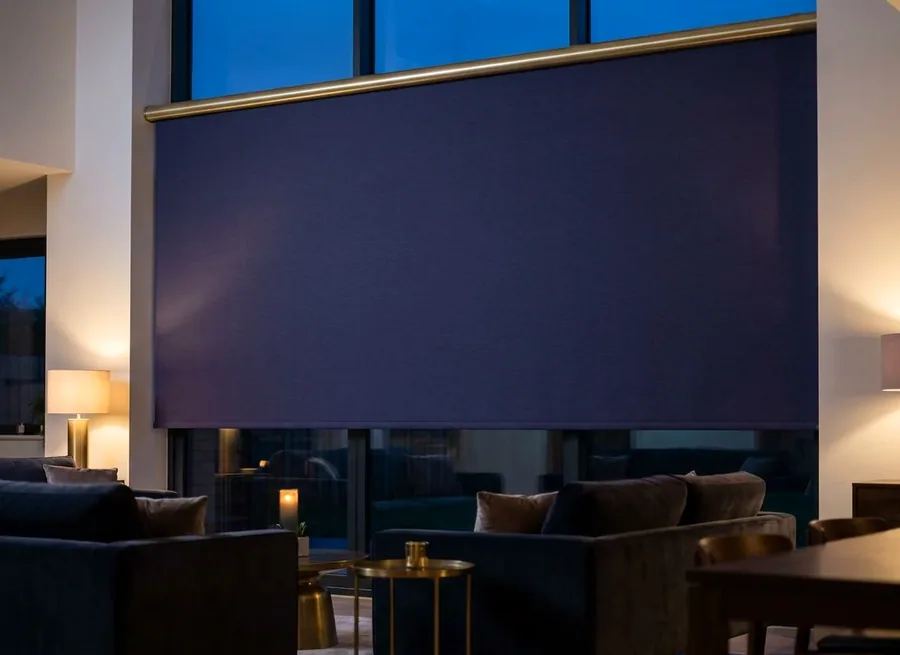
Blockout roller blind lowered over double-height windows at dusk
The choice that matters

Pick the fabric for the job the room does

Same mechanism, three very different results. Most Sea Point apartments end up with a mix — and the free measure is where we match fabric to room, window by window.

Blockout Fully opaque fabric for bedrooms and media walls. With a cassette and side channels it gets close to hotel-dark — the difference between waking with the joggers on the promenade or on your own schedule.
Sunscreen A technical weave at 3–5% openness that cuts glare and UV while keeping the outline of the sea. The lower the openness, the more heat it stops and the less you see through — we help you weigh that room by room.
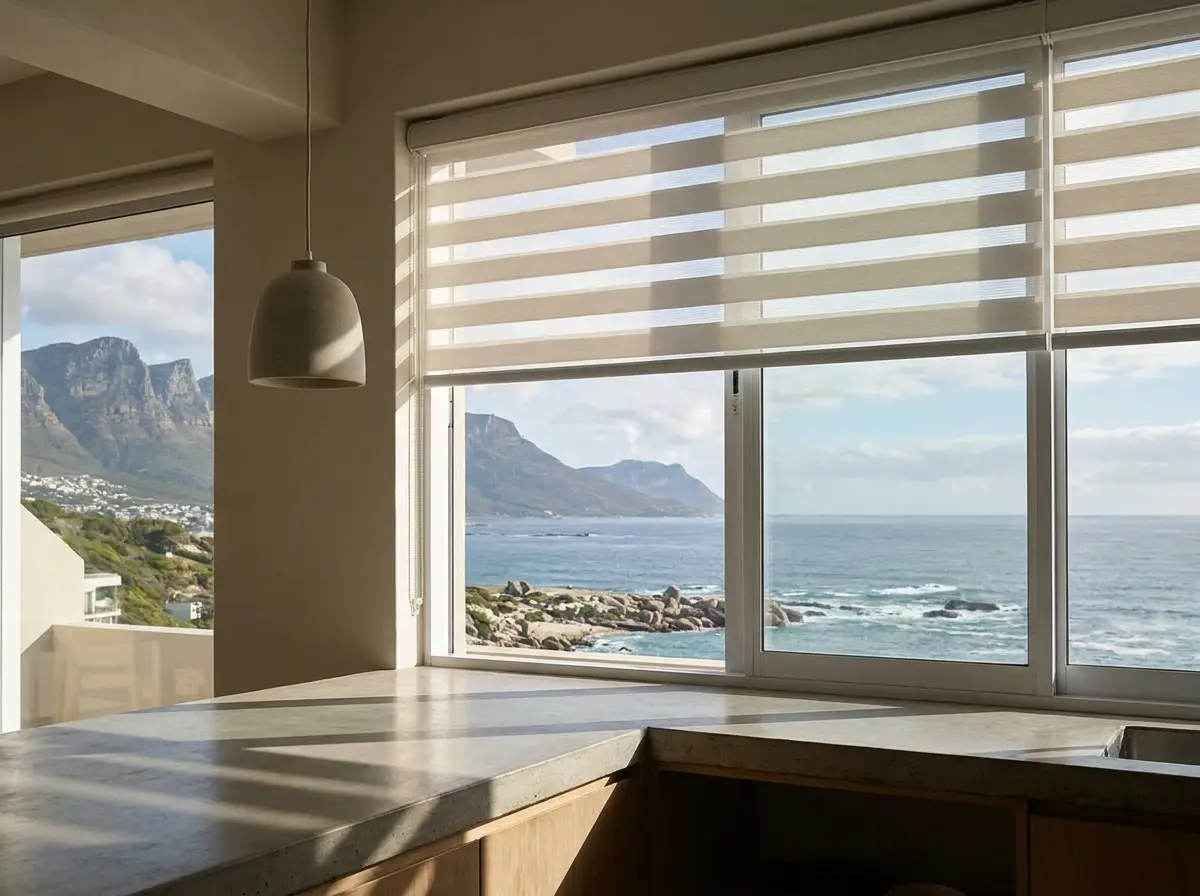
Day/night double roller Two fabrics on one bracket — sunscreen for the day, blockout for the night. The right answer when one window has to do both jobs. Read more about day/night blinds.
Cassettes & side channels A sealed headbox keeps salt air off the roll and gives the top of the window a clean architectural line; side channels close the light gaps blockout fabric alone can’t.
Why here

Built for Beach Road glass

Sea Point windows are wide, exposed and close to the water. That changes the specification — not the price of admission, just the thinking.

Wide sliding glass usually means two or three linked blinds rather than one oversized roll, so fabric stays taut and the tubes don’t bow. On floor-to-ceiling panes we’ll often recommend motorisation — not as a luxury, but because a chain on a three-metre drop is a chore, and a linked motor moves the whole wall of glass together.

Hardware is powder-coated aluminium and the roll hides inside a sealed cassette where the salt haze can’t settle. Chains, where fitted, are anchored taut to the wall with tensioners — child-safe as standard, not as an extra. And every install ends with an operation demo, because a blind you fight is a blind you stop using.

Questions

Rollers, honestly answered

Will a sunscreen roller stop my lounge heating up in the afternoon?

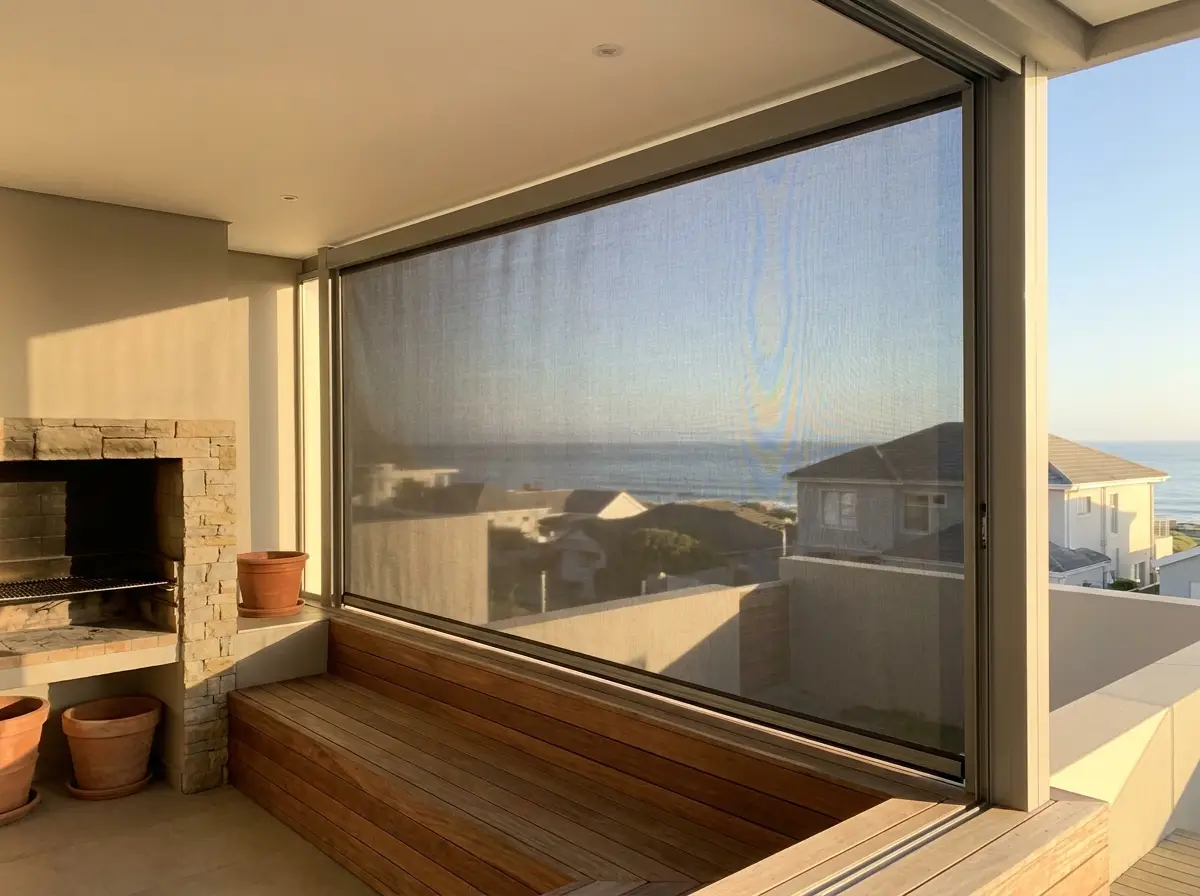
It helps meaningfully — a dark 3% sunscreen absorbs and rejects a good share of the glare load — but fabric inside the glass can only do so much on a full-west window. If heat is the main complaint, ask us about external options like zip screens at the measure; if glare and UV are the complaint, sunscreen is exactly the tool.

Can one blind cover my whole sliding door?

Up to a point — beyond roughly three metres a single roll gets heavy, the tube can deflect, and the fabric risks tracking. Linked blinds on one control, or a motorised pair, look cleaner and last longer. We’ll confirm the split at the measure so joins land on the door mullions.

How do I clean a roller this close to the sea?

A soft brush or vacuum on low for the fabric, and a damp fresh-water wipe for the hardware every month or two. It’s a five-minute habit that doubles the life of anything metal on this coastline — we’ll show you at handover.

Keep exploring

Often specified alongside

Where we fit these

Roller blinds up and down the seaboard

The blockout-and-sunscreen combination earns its keep on almost every window we measure — from the stadium-facing towers of Green Point to Mouille Point’s front-row apartments, the sheltered west-facing glass of Bantry Bay and the wide sunset walls above Fresnaye. Wherever the light is the problem, a roller is usually the first answer.

Ready when you are

See the fabrics against your own light.

A consultant brings the sample books to you — free measure, written per-window quote, no obligation.